
Rosacea Treatment London and East Sussex:
Understanding your options — and how BBL HEROic is helping patients achieve clearer, calmer skin.
How BBL HEROic Can Help You Achieve Calmer, Clearer Skin
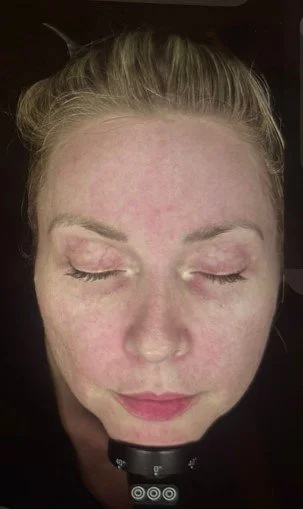
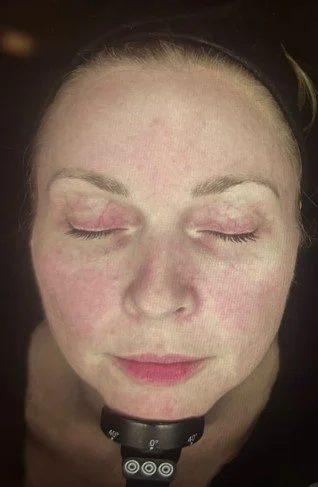
Pre-treatment
Post-Treatment
Struggling with persistent facial redness or rosacea? Learn what’s really going on in your skin, explore your treatment options, and find out how BBL HEROic is helping patients in London and East Sussex achieve clearer, calmer skin.
Introduction
April is Rosacea Awareness Month — a good moment to talk about a skin condition that affects far more people than most realise, and that is still widely misunderstood. If you have been living with persistent facial redness, frequent flushing or visible thread veins, you are not alone, and you do not have to simply put up with it. Rosacea is a recognised medical condition with a range of effective treatments available — the key is understanding what is happening in your skin and finding the right approach for you.
What is Rosacea?
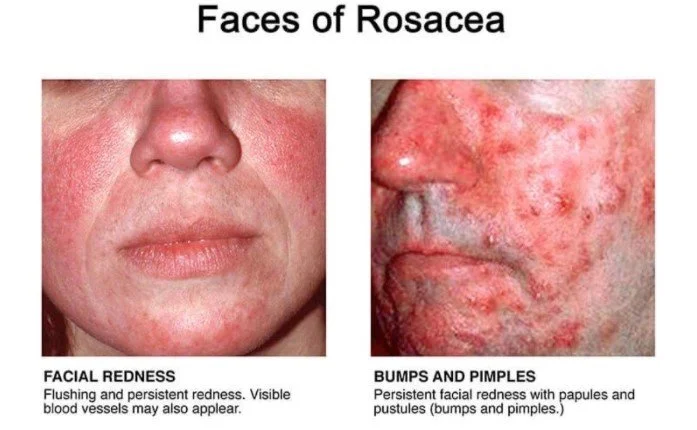
Rosacea is a chronic skin condition that causes redness, flushing and sometimes visible blood vessels — most commonly across the cheeks, nose, chin and forehead. Some people also experience sensitivity, a burning or stinging sensation, or spots that can look similar to acne. It tends to come and go, with periods where the skin settles and periods where symptoms flare up.
It is more common in fair skin, typically develops in adulthood, and affects both men and women — though it often presents more severely in men when it does occur.
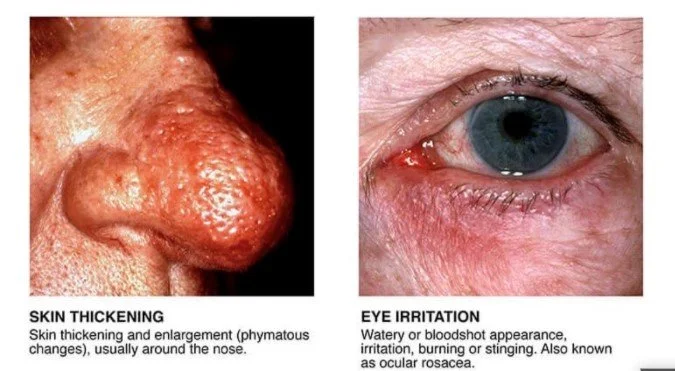
The exact cause is not completely understood, but we know that rosacea involves a combination of an overreactive blood vessel response, low-grade inflammation in the skin, and a disrupted skin barrier. In practical terms, this means that the blood vessels in the face dilate more easily than they should, and over time, some of them become permanently visible just beneath the surface of the skin.
Common triggers that can cause symptoms to flare include sun exposure, heat, alcohol, spicy food, exercise and stress. Identifying your own personal triggers is a helpful part of managing rosacea long-term, but for most people, avoiding triggers alone is not enough to control the condition.
Why It Matters — and Why It’s Worth Treating
Rosacea is often dismissed as just “sensitive skin,” which means many people spend years using the wrong products, feeling self-conscious, and assuming nothing can be done. In reality, rosacea is a medical condition with effective treatments that can make a significant difference — both to the appearance of the skin and to how you feel day to day.
Left untreated or poorly managed, rosacea tends to worsen gradually over time. The persistent redness can become more fixed, thread veins can multiply, and the skin can become increasingly reactive. Seeking the right help earlier makes treatment easier and results better.
The impact on confidence and quality of life is also very real. Many patients describe avoiding social situations, wearing heavy make-up daily to cover redness, or feeling frustrated that something so visible is so poorly understood by those around them.
What Can Be Done? A Realistic Overview of Treatment Options
Managing rosacea well usually involves a combination of approaches — there is rarely a single solution that does everything. Here is an honest overview of what is available.
Managing Rosacea
• Skincare & Daily Habits –
This is the foundation of any rosacea management plan. The skin barrier — the protective outer layer of the skin — is often weakened in rosacea, which makes the skin more reactive and prone to flaring. Using gentle, fragrance-free products that actively support and repair this barrier is important.
Ingredients worth looking for include ceramides (naturally occurring fats that help hold the skin’s outer layers together and lock in moisture) and niacinamide (vitamin B3), which helps calm redness, reduce inflammation and strengthen the skin over time. Azelaic acid is another well-regarded option — it helps to reduce redness and uneven skin tone, has a calming effect on inflammation, and is generally well tolerated even by sensitive skin. Both niacinamide and azelaic acid are available in over-the-counter formulations, though higher-strength azelaic acid is available on prescription for more significant concerns.
A high-factor, broad-spectrum SPF applied every morning is also non-negotiable — UV exposure is one of the most consistent triggers for rosacea flares and long-term vascular changes in the skin.
• Oral Medication –
In moderate-to-severe cases, or where topical treatments have not been sufficient, a short course of oral medication — most commonly a low-dose anti-inflammatory antibiotic — can be very effective, particularly for the spot-like breakouts associated with rosacea. This is usually prescribed alongside skincare and other treatments rather than as a standalone solution.
• Prescription Topical Treatments –
For people with more active symptoms — particularly spots or persistent redness that skincare alone cannot address — there are several prescription creams and gels that a doctor can recommend. These work in different ways: some calm inflammation, some target specific triggers in the skin, and some temporarily narrow the blood vessels to reduce visible redness. These are typically prescribed and overseen by a GP or dermatologist and form an important part of managing the inflammatory side of rosacea.
• In-Clinic Light-Based Treatments –
Where rosacea causes significant visible redness and thread veins — the vascular side of the condition — creams and tablets have limited ability to address these directly. This is where in-clinic treatments, particularly light-based therapies, come into their own.
BBL HEROic: Advanced Light Therapy for Rosacea
Advanced Light Therapy
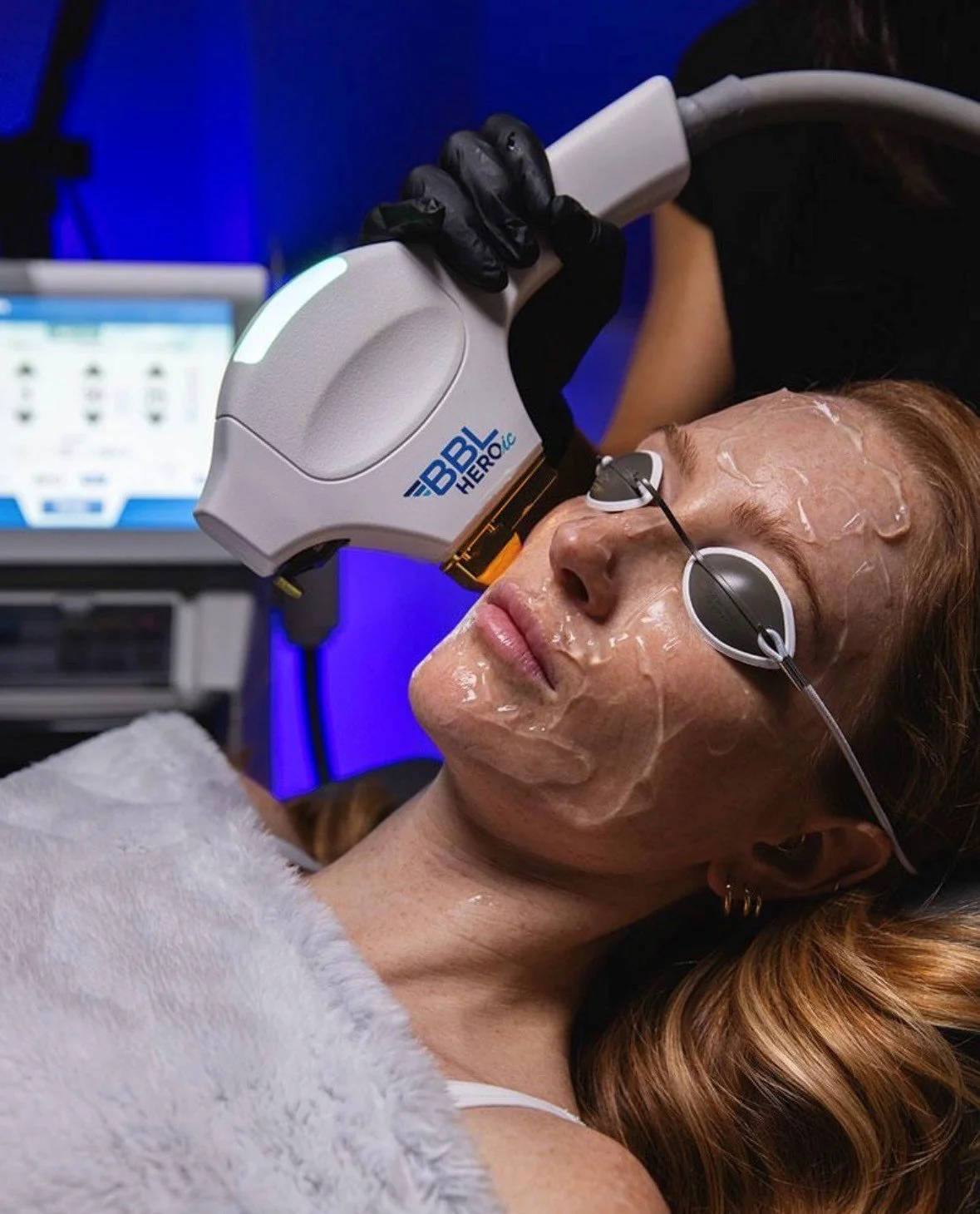
BBL HEROic (BroadBand Light) by Sciton is one of the most effective technologies currently available for treating the redness and visible blood vessels associated with rosacea. It is the treatment we use most frequently in clinic for vascular rosacea concerns — and the results, in the right candidate, are consistently impressive.
How it works
BBL delivers controlled pulses of light energy into the skin. The light is absorbed by the red pigment in the blood vessels, generating gentle heat that causes the vessel to collapse and be naturally cleared by the body over the following weeks. The result is a visible reduction in thread veins and background redness, with many patients also noticing improved overall skin clarity and evenness of tone.
Beyond targeting visible vessels, BBL has a calming effect on the chronic low-grade inflammation that drives rosacea — which can help reduce the frequency and intensity of flares over time, not just improve how the skin looks immediately after treatment.
Your Journey
BBL HEROic is a comfortable, low-downtime treatment that fits easily into your lifestyle.
What to Expect
A session takes around 20–30 minutes and doesn't require anaesthetic. Most people feel a mild warming or snapping sensation during treatment.
The Session
1
2
Recovery
After treatment, there may be slight redness for 24–48 hours, but no major downtime. You can return to your normal routine the same day.
3
Results
Best results are usually seen after 3–4 sessions, with maintenance treatments helping to sustain improvements long-term.
Is It Right for You?
BBL HEROic is particularly well suited to people with persistent facial redness, frequent flushing or visible thread veins who have tried skincare and topical treatments without achieving the results they were hoping for. It works best on lighter skin tones and is a good option for those who want an effective, non-surgical treatment with minimal disruption to daily life.
A thorough consultation is always the starting point — to assess your skin, understand your concerns and symptoms in context, and make sure BBL is the most appropriate treatment for you. In some cases, a combination approach — pairing BBL with specific skincare or other treatments — gives the best overall outcome.
The Honest Truth About Managing Rosacea
It is worth being clear: rosacea is a long-term condition, and no treatment — however effective — is a permanent cure. The goal is meaningful, sustained improvement — calmer skin, fewer flares, greater confidence — alongside an ongoing routine that keeps symptoms well controlled. Many of our patients achieve excellent results and find that with the right plan in place, rosacea no longer dominates how they feel about their skin.